The Blue Hour Is Shorter Than You Think, and That Changes How You Schedule a Shoot
The twilight window that sells a listing is short and doesn't wait for a late start. Here's how to schedule around it.
September 22, 2026 · 4 min read
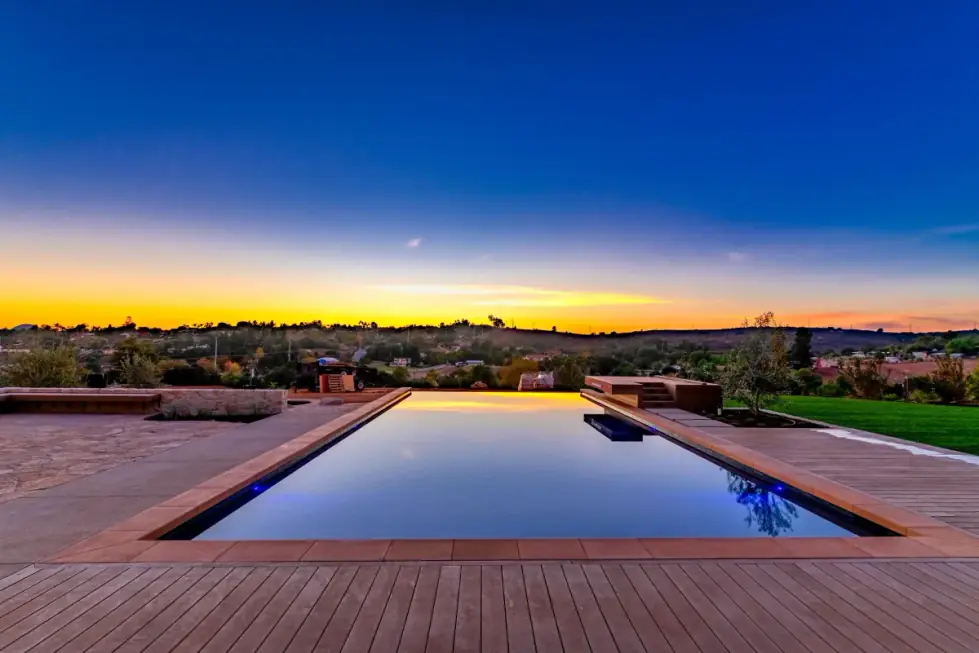
Blue hour isn't sunset. Sunset is the moment the sun drops below the horizon. Blue hour is what happens for a short stretch after that, when the sky still holds color instead of going black, and it's the window when twilight real estate photography actually works. On most San Diego evenings that window runs somewhere between fifteen and thirty minutes, shorter in summer when the sun drops at a steeper angle, and it doesn't wait for anyone.
Why the window is short
What photographers call blue hour is really civil twilight, the period after sunset when the sun is still close enough below the horizon to light the upper atmosphere without lighting the ground. How long that lasts depends on how steeply the sun drops, which depends on latitude and time of year. San Diego sits far enough south that the sun goes down at a fairly steep angle most of the year, which means twilight moves through its stages quickly compared to cities further north. The practical result is a window that opens gradually, holds its best color for a few minutes, and then closes. There's no pausing it and no getting it back once it's gone for the evening.
Why the interior lights have to be on before the photographer arrives
A blue hour photo works because of a balance point: the moment the fading exterior sky and the warm interior lamps sit at roughly the same brightness. Too early and the sky still overpowers the windows, so the interior lights barely register. Too late and the sky has gone flat and dark, so the house looks lit against nothing rather than glowing against dusk. Hitting that balance point means every lamp, overhead, and accent light that's going to be on for the shot needs to already be on when the light starts to fade, along with any pool or landscape lighting. Flipping switches once the crew is set up eats into a window that's already only minutes long.
Booking a session around a listing date
Sunset in San Diego moves by more than two and a half hours over the course of a year, from mid afternoon in December to nearly eight in the evening in June, so a blue hour booking has to be scheduled against the actual sunset time for the date it's shot, not a fixed clock time. A twilight session can be added to a regular daytime photo session and shot the same evening once the light drops, or booked as its own separate evening if the listing date and the crew's daytime schedule don't line up. Either way it has to be planned for a specific date in advance, because the window it depends on isn't something that can be improvised on arrival.
What to have ready before the crew shows up
- Every interior light the buyer would actually use on in the evening, on and checked for burnt bulbs
- Blinds and curtains open enough to let the interior glow show through the glass
- Pool, spa, and landscape lighting on if the property has it
- Porch and exterior fixture lights on, including any on a timer that might not have triggered yet
- Cars clear of the driveway and street frontage before the light starts to fall
None of that is difficult, but all of it has to happen before the window opens, not during it. A blue hour session that starts with the crew waiting on someone to find a light switch is a blue hour session that loses its best minutes to something that could have been ready an hour earlier.
Why it usually gets paired with the daytime shoot
The most common way to schedule a blue hour session is at the end of the same visit that covers the interiors, aerials, and any video. The crew is already on site, the lights are already the way they need to be, and the listing gets a full afternoon into evening arc out of one appointment rather than two. The exception is a listing where the date is tight against the light, an evening list-day or an agent trying to have twilight images ready before a weekend open house. In that case a standalone twilight session, booked for a specific sunset time, is worth arranging on its own rather than waiting for the next available full day.
Either way, the constraint is the same. Blue hour isn't a mood that can be recreated later in editing with any real honesty, and it isn't a slot that can slide by twenty minutes without losing most of its value. Scheduling around it, rather than trying to fit it into whatever time is left over, is what actually gets the frame that makes a buyer stop scrolling.
SD Home Pix, (619) 844-9392
Call (619) 844-9392More articles
Why One Exposure Can't Photograph a Room With a Window In It
A single shutter click can expose for the room or the view, never both. Here's the optical reason, and what fixes it.
Matterport or Zillow 3D: How to Choose, and Why You Might Want Both
Two tour platforms solve two different problems. Here's what each is actually good at, and when a tour is worth booking at all.